
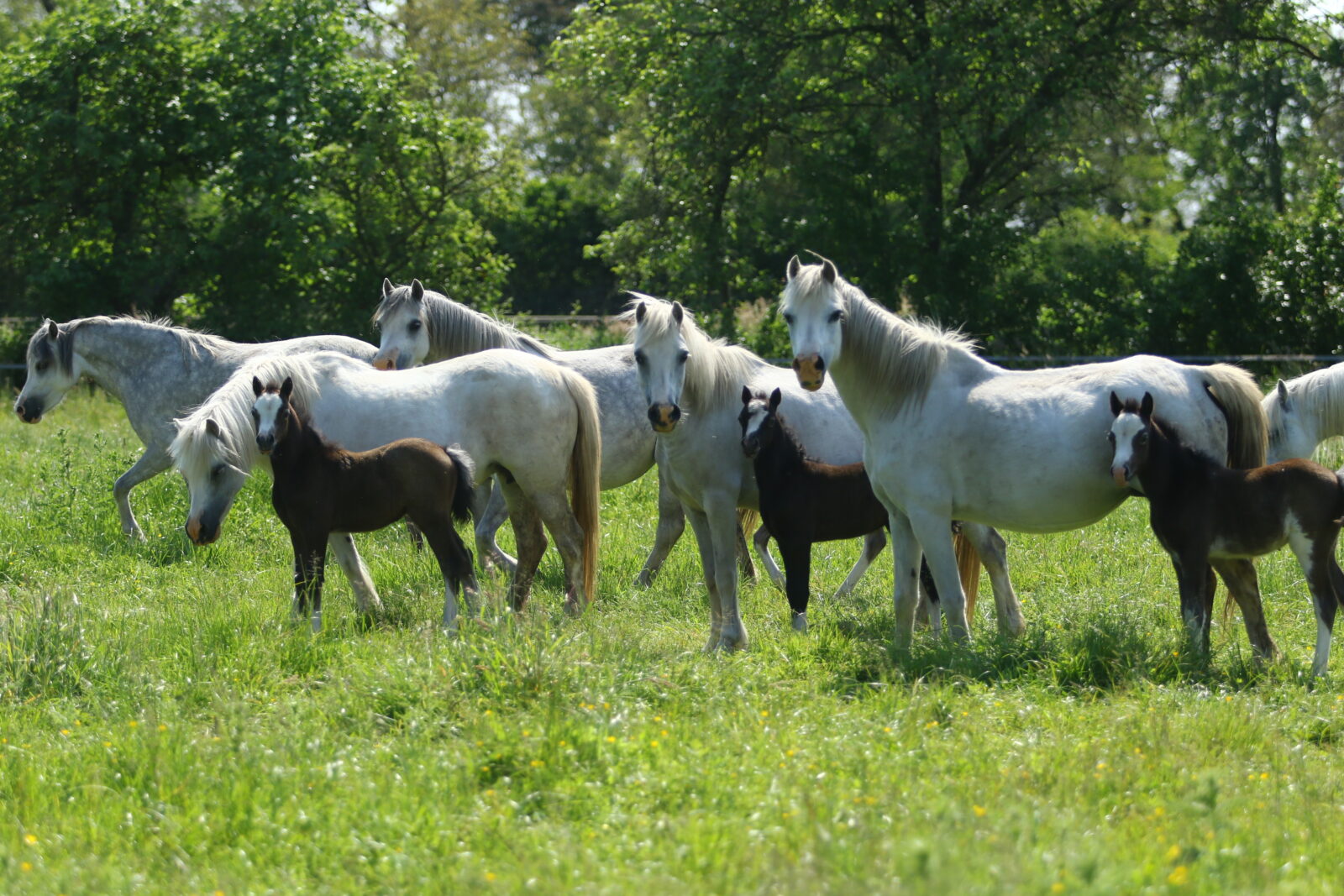
Board chairman Piet Peters on returning to NWPCS board

Pete Peters
This article appeared on Wednesday, December 8, 2021 in The Horse Newspaper
For over two weeks the Dutch Welsh Pony & Cob Studbook (NWPCS) had no board, after the four main board members resigned effective immediately at the November 12 Members' Council meeting. On Dec. 1 came the redeeming news: the main board has been reappointed. Chairman Piet Peters gives his view on the events and explains why, despite everything, he is enthusiastically getting back to work.
‘Holding no grudges; draw a line under it and move on again’
The message about the resignation was short but clear: ‘A discussion arose in the Council of Members meeting about the new statutes and regulations and the process towards them. The main board felt insufficiently supported in this discussion and therefore resigned of its own accord.’ Even a little clearer: the member council members from region North voted against adopting the new statutes and regulations of the studbook.
Lots of volunteer work
Piet Peters explains why that was a breaking point for the board: “Five years ago, when I started on an interim board at the NWPCS, it was already clear that we had to start working on the statutes and regulations. It's extra urgent because the Administration and Supervision of Legal Persons Act went into effect July 1. This means, among other things, that a director of an association is jointly and severally liable if there is improper performance of duties.
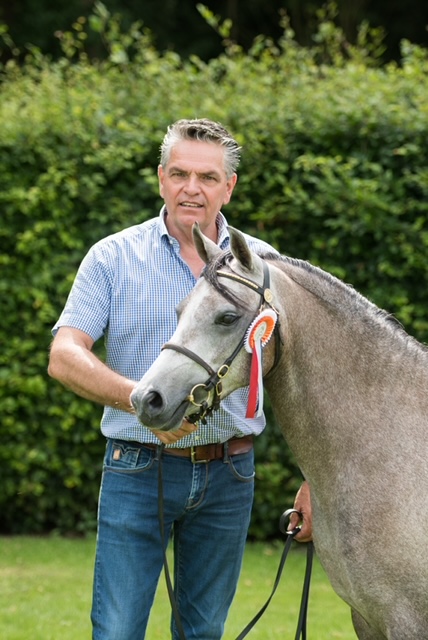
of the NWPCS.
PHOTO VIVIAN HESEN
Of course you take out insurance to cover the risks, but it doesn't apply if you as a board have deliberately not arranged certain things properly. So it is important for a studbook to have its statutes and regulations in good order and we started doing that three years ago.
Board member Rhodé van de Praat pulled that cart and she in particular put an awful lot of time into it. A lawyer was sought and throughout the process we regularly submitted the drafts back to the member council members, who in turn submitted it to the members via the departments. In short, it took an awful lot of time and work, done by volunteers, and it was finally ready.
Called and paged
We absolutely did not see coming that it would be voted against. But it did, and even after we left the meeting and indicated that this really needed to be resolved for us, it did not change. The group stuck to its position. Then we decided unanimously as a board: we're not going to do this. That was also emotional for the board: so much hard work had been done, now after three years it was finally done and then this happens.”
‘We had a good board, it was running well and we were having fun. So why wouldn't we continue?’
The fact that two days later the Council of Members unanimously approved the new statutes and regulations was, of course, also an important step in the right direction. Still, it took a while - almost two weeks - before the ball was in the church and it could be announced that the former board was back to work. Peters: “I felt really lousy the day after we stepped out. A lot of members then called and texted, that definitely had an impact. We had a good board, it was running well and we were having fun. So why wouldn't we continue?”
Good lawyer
Two summonses fell on the mat a day later. The NWPCS reports on its website: ‘They come from members of the North Section who were involved in the integrity violation of a closed meeting of the Council of Members last November. (The digital meeting was attended by a judge without disclosure).
One of the members disagrees with the suspension as a juror and claims damages as a result and claims, among other things, that the suspension as a juror be lifted. Two other members also claim to have their suspension lifted retroactively and claim, among other things, that all decisions of the Council of Members since November 2020 should be declared invalid.’
Peters is not worried about this. “We have a good lawyer, the same one who advised in the integrity case. It all costs a lot of money, money from the association that we would rather spend on other things, so I sincerely hope they come to their senses.”
Threats
The president does notice that the ‘corona situation’ is causing coarsening in dealings, even within the studbook. “Within the smaller studbooks there is more often fuss, but I really notice that the wicks mu shorter. I am not easily scared, but I have also had threats thrown at my head and I think that is a bad thing.
‘Gossip, sedition, threats and swearing and fights: we should not accept it as a sport and a breeding farm’
I am therefore very pleased with the news that the Horse Sector Council will start investigating undesirable behavior within the sector. After all, this does not only occur in sport. Gossip, sedition, threats and swearing and fights: we should not accept it as sport and breeding.”
Looking into the eyes
The coming period is primarily one of action, Peters believes. “The stallion approval is coming up and it has to be as good as ever. We are also going to organize a show for the first time this year; we really have to put our foot down on that as well. I have absolute confidence that we will do great things together again. The vast majority of the 1250 members of our studbook are positive and are going for it, just like we are.”
Resentful, Peters says he is absolutely not. “Two of the three resigned member council members would like to have a conversation to clear the air and I think that's totally fine. It's better to talk these things out, then you can look each other in the eye again when you meet up later. Resentment is not in my character; I draw a line under it and move on. For that reason, I never look at pictures either: I'd much rather look to the future.”
Differences
Peters explains with an example what one of the issues was about when tuning the statutes and regulations. “Suppose one of our members knowingly disadvantages the association, what sanction should there be? Take a stallion owner who just has another stallion covered because the ‘right stallion’ is not available for whatever reason. Within the studbook, dna is randomly checked - it is too expensive to do that with every foal. As a result, we might find out ten years later that certain offspring have abnormal dna and thus do not have the sire listed on the paper. It costs tons of money to correct such a mistake. What fine should someone get then? In South, they initially thought 50,000 euros was too little; there they wanted 250,000 euros. While in the North, people argued for a fine of 10,000 euros. So that's how far apart opinions can be! We ended up keeping it at 50,000.”
 Nederlands
 English
 Español
 Deutsch
 Français