

wolf and horse industry
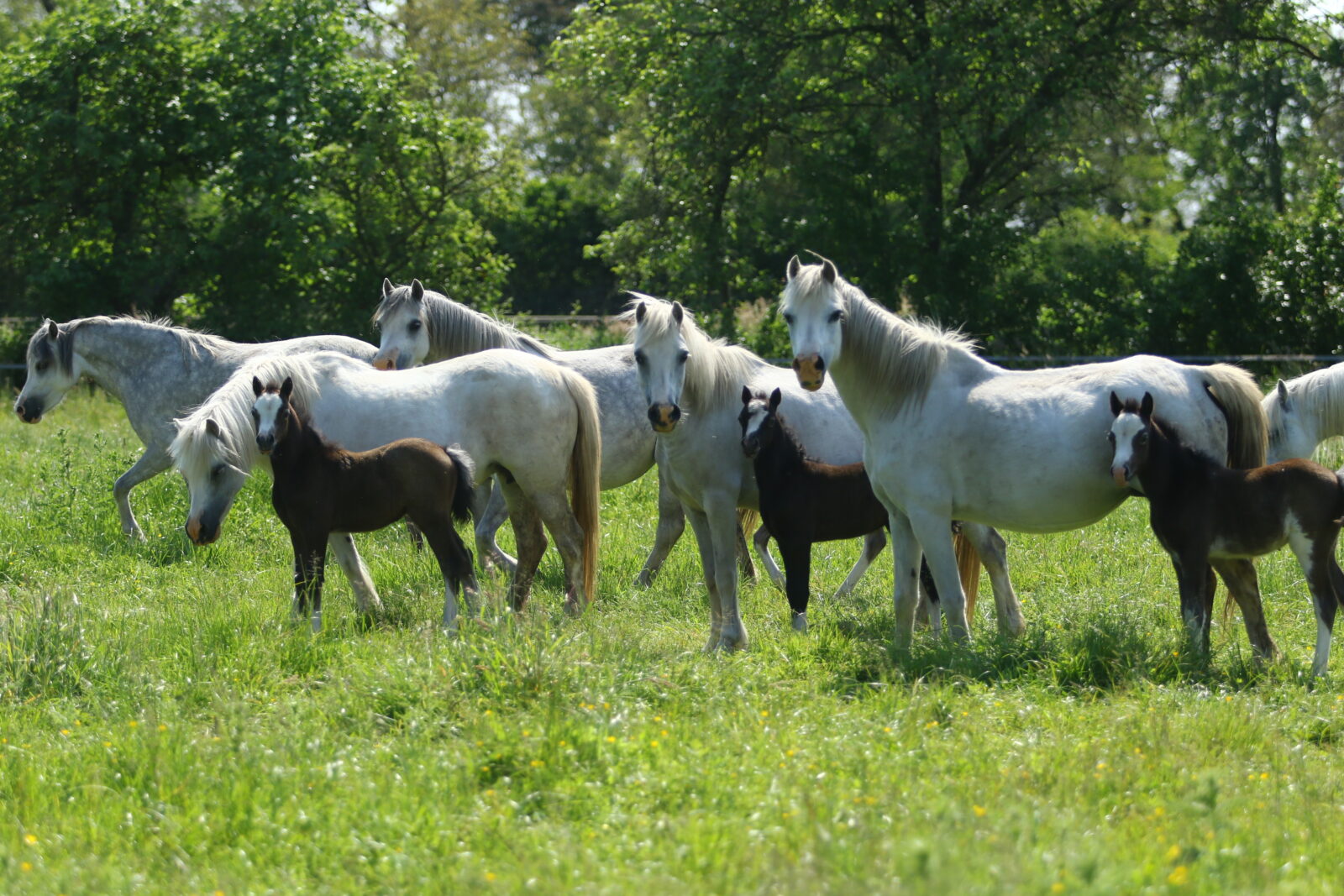
The wolf is back in the Netherlands and is causing a lot of animal suffering. So too with equidae. The Equine Sector Council (SRP), of which the Koepel is part, has previously expressed its opinion that the minister should come up with an approach to enable management on the wolf. But in the meantime, animals are grabbed and there are many concerns among pony, donkey and horse owners. Therefore, there must be a commitment to funding, education and further research to better protect equines.
In the Netherlands, the number of incidents is increasing hand over fist. In 2020, there were already more than twice as many wolf attacks registered in the Netherlands through October of that year as in all of 2019. As of March 7, 2015, there have now been 1,148 fatal bite incidents involving farm animals, of which the wolf has been identified with certainty as the perpetrator. Recently, the horse industry has also suffered incidents involving wolves. Between Aug. 10 and Nov. 30 of this year, there were nine reports of a possible wolf attack. Three ponies were killed and one horse. Six animals were injured (at one location two horses). Only in one case with a dead pony was proven to be a wolf. In all other cases, the species is not yet known. Except for one report from Friesland, all reports are from the province of Drenthe.
Where are wolves
The first wolf settled in the North Veluwe in 2018. A second wolf joined it in early 2019. This pair has had young every year since 2019. More wolf pairs emerged in recent years. By 2022, at least 16 wolf cubs have now been born to four wolf pairs.
At least three in the Southwest Drenthe/Southeast Frisia area, six in the North Veluwe, four in the Central Veluwe and three in Park de Hoge Veluwe. This means that four packs are present in the Netherlands, one of which is in the northern part of the Netherlands for the first time. In addition, there is regular activity on the Southwest Veluwe, in the border area between North Brabant and Limburg and in the region of Southwest Brabant and Zeeland. There are also wolf territories just across the border with Germany and Belgium (see Figure 1).
There are now four places in the Netherlands where the wolf has officially established itself and a provincial wolf commission has been established. These are the provinces of Friesland, Drenthe, North Brabant and Gelderland.
Preventive measures
While prevention is preferred, the SRP strongly doubts that these measures have also been assessed for effectiveness, unintended side effects and affordability. Placing fences and fences everywhere is not a solution. It has profound effects on the landscape and other wildlife and is incredibly costly. However, right now government policy leaves no choice other than to take proposed preventive measures to at least make it as difficult as possible for the wolf.
To determine whether wolf-proofing is necessary, estimating the risk of wolf attack is step one. First, see if you are in an area where the wolf is active. This is not the case throughout the Netherlands. If you are in an area with an active wolf, see what preventive measures you can take. When the wolf attacks, it is often older, weaker or small animals, which are insufficiently protected. Not only because of wolf-resistant fencing, but also because of the herd environment in which they are grazing. The wolf is an opportunist: it chooses vulnerable animals, against which it stands a better chance. Therefore, it is advisable to keep animals, especially mares with foals ’s and smaller ponies, stabled at night. However, if you are not in a position to house vulnerable animals at night, make sure you have a good fence with a wolf-resistant exterior. The use of adequate fencing with troom (wires) is highly recommended. The basic principle on the wolf-proof (outer) side is a height of 120 cm, equipped with power wires, with no more than 20 cm between the lower wires and a voltage of at least 4,500 volts.
In the ‘Wildlife Damage Prevention Kit’ for the wolf of BIJ12 contains an overview of preventive measures that animal owners in a wolf area can take to prevent or limit damage by wolves. Damage by wolves cannot be completely excluded, but the chance of an attack by the wolf can be greatly reduced by using preventive measures.
Should keepers of equines want advice on making their current fencing wolf-proof, the wolf consultants in Friesland, Drenthe and Gelderland advise keepers on wolf-proofing measures free of charge, both remotely (by phone, e-mail) and on location. An appointment can be made through the provinces' website.
Advice on wolf attack
If you do have damage to your animals as a result of a wolf attack, this is largely compensated by BIJ12. Via DNA research, or in another irrefutable way, it can be proven whether or not the damage was caused by a wolf.
To understand the development of equine bite incidents, it is very important that all cases are reported. Therefore, the advice of the SRP is to take photos of the carcass - especially the bite wounds - and to contact BIJ12. The fund reviews the photos and - if necessary - comes to collect DNA samples within 24 hours. Then cover the cadaver, but leave it lying around. Have a veterinarian check the other equidae present (costs will be reimbursed) and move these animals to another location; in case of a successful attack the wolf often returns to the location where it struck. Finally: ask a colleague to assist you, because it is still very unpleasant to find a killed animal.
Want to follow the information about the damage caused by the wolf in the Netherlands? On the website of BIJ12 all incidents reported.
Prevention measures grant scheme
Sheep and goat farmers in recognized wolf areas in Gelderland, Friesland, Drenthe and North Brabant will receive compensation for the cost of taking preventive measures.
SRP has recently held discussions within the area committee on wolf damage prevention Drenthe to open up this scheme to equine owners who want to take preventive measures as well. There are high hopes that this scheme will also become available to both professional and hobby horse owners in the province of Drenthe in 2023.
Legal framework and compensation
Management of the wolf is not possible because the wolf has a protected status in Europe. It is forbidden to kill, capture and deliberately disturb wolves. However, recently the European Parliament passed a resolution on amending the wolf's protection status.
When, based on monitoring data, it appears that the desired wolf population has been reached, the way will be clear to lower the status of the wolf in the Habitats Directive from ‘highly protected’ to ‘protected’. It is now up to the European Commission to respond to the call from the European Parliament and come up with amendment proposals to the Habitats Directive.
In addition, together with the other member organizations of the SRP, we continue to emphasize that if society chooses to give wolves a place in the Netherlands, that same society must also support the parties who are harmed by the wolf. This means that prevention against and damage caused by wolves, including indirect damage, must be fully and quickly compensated.
Source: Press Release Dome Breeding
 Nederlands
 English
 Español
 Deutsch
 Français