
Stricter I&R horse farming forthcoming
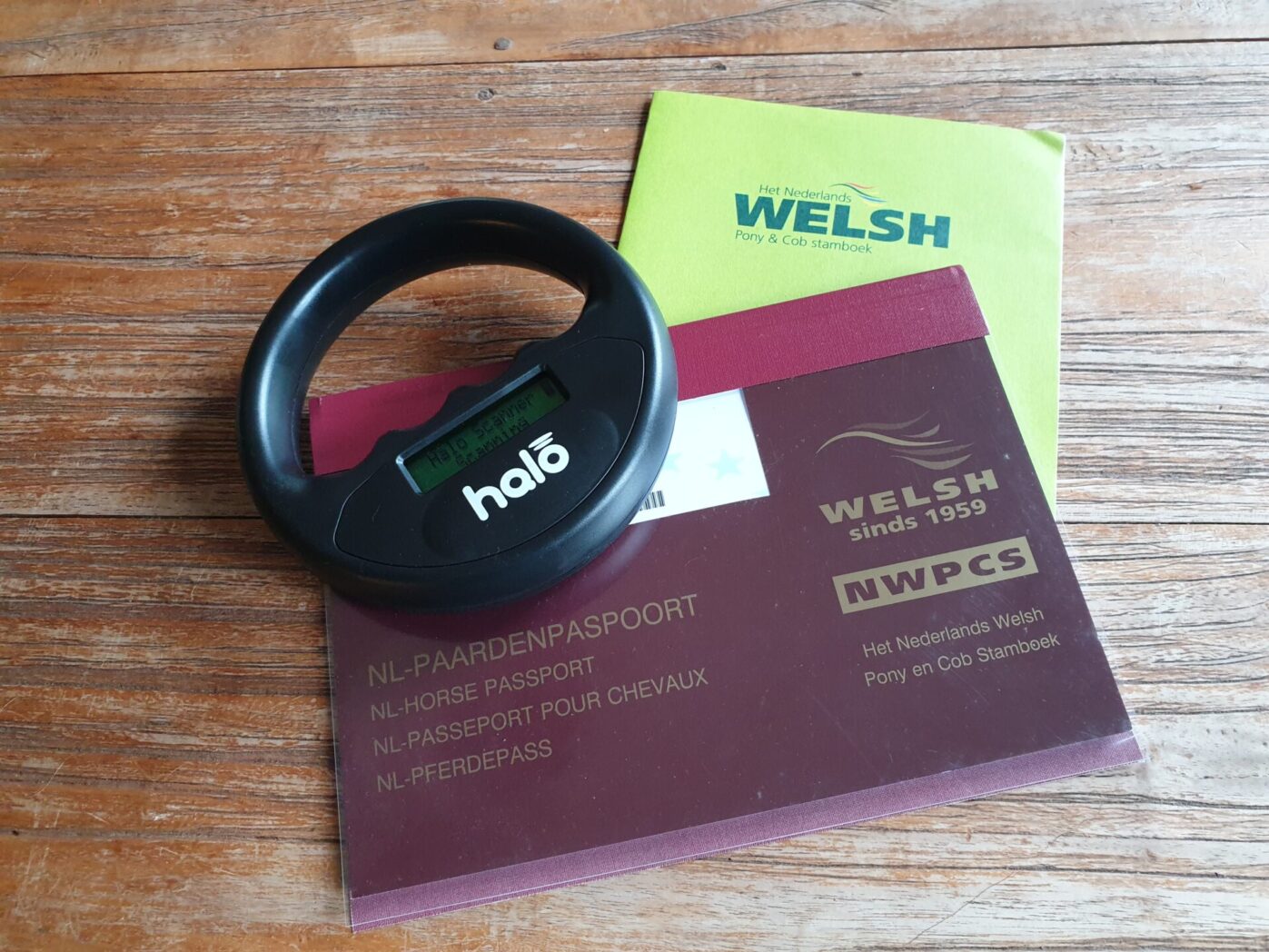
passport, chip, registration, transponder
Starting April 21, 2021, the identification and registration (I&R) of equines in the Netherlands will become much stricter. This means that all horse owners must register which horses are kept on their property. This will be done in a database managed by the government. Requirements for stricter I&R systems have been discussed before, but are now becoming a reality.
Registration Requirement
The identification and registration (I&R) of equines—including ponies, donkeys, and mules—is a European requirement for all horses kept for recreational or professional purposes. All horses (except foals younger than 6 months) must have an equine passport and a microchip. Currently, the keeper or owner of the horse is not yet registered, but as of April 21, 2021, this will change, and the Netherlands Enterprise Agency (RVO) will launch a database to track which horses are kept where.
Insight and Overview
This registration requirement isn’t coming out of nowhere; as of 2021, a new European Animal Health Regulation will take effect, and as part of this, all horse farms in the Netherlands must be included in a central database managed by the government. All horses kept at these facilities must be registered in this database to provide insight into the number of horses per location. A facility can even be a pasture where a horse is kept for more than thirty days; this period does not have to be consecutive. All responsibility for this rests with the horse owner. This is important to ensure a better overview in the future in the event of an outbreak of a contagious disease such as African horse sickness. As a business owner, you are therefore required from that moment on to maintain a record of the horses present on the premises with the RVO. For horses that are temporarily absent from the premises, a local record must be maintained.
Local Administration
In the RVO’s online system, you do not need to record temporary movements if, for example, a horse goes on a trail ride, trains off-site, competes, or stays at a breeding station for less than 90 days. However, you must keep track of this information yourself in your local records, in case of an inspection, so that you can account for the whereabouts of all horses at that time. You may maintain these records in any system of your choice, such as a notebook, folder, Word document, or Excel file.
How does this work?
Every horse-keeping operation will have its own registration system in which all relevant details—such as the location, business activities, facilities, any other locations (such as pastures), and the number and type of horses—must be recorded. This is mandatory for every horse-keeping operation, whether it is a commercial or hobby operation. Every horse must be entered into the system within twelve months of birth, with the exception of wild horses. The following information must be entered into the system for each horse: microchip number and type
- Passport number
- Gender
- Date and Country of Birth
- Passport issuance date and issuing authority
In addition, the loss of a passport, the possession or application for a duplicate, or the death of a horse must be reported immediately, including the relevant date.
Questions?
LTO understands that the date of these changes may still seem far off, but it’s still wise to be well-informed now about the changes that will need to be made at your business. That’s why LTO wants to guide you through this process as best as possible by answering your questions. So, do you have any questions? Send an email to mtheunissen@lto.nl and LTO will soon announce on its website answers to everything.
Source: LTO
 Nederlands
 English
 Español
 Deutsch
 Français